Media

WE’RE GETTING NOTICED...

How to Choose the Best Cafe Robot for Your Business?

Choosing the best Cafe Robot is not a search for the most futuristic machine. It is a decision about service speed, drink quality, labor design, and customer trust. A robot may look impressive beside a polished counter. Yet it can still fail during a morning rush if cleaning takes too long.

The International Federation of Robotics reported nearly 200,000 professional service robots sold worldwide in 2023. Its World Robotics 2024 report also recorded more than 541,000 industrial robot installations in 2023. These figures show strong automation momentum, but they do not measure cafe success directly. Cafe Robot data remains fragmented. That limitation matters.

The National Restaurant Association’s 2024 industry research found that technology can improve restaurant efficiency and customer experience. However, technology only helps when employees and customers can use it comfortably. Henry Hu, founder of Cafe X, has expressed the central promise simply: “We want to make coffee more convenient.” This idea should guide the evaluation.

A practical buyer should examine cup consistency, order integration, cleaning access, maintenance response, and staff training. Watch the machine prepare several drinks, not one perfect demonstration. Check the counter after two busy hours. Is the floor dry? Are ingredients easy to refill? Can a team member solve a basic fault without waiting for a technician?

The strongest Cafe Robot may not be the fastest or most advanced model. It may be the one that fits your menu, footprint, budget, and service culture. Some assumptions will be wrong. Pilot testing exposes them before a costly rollout.
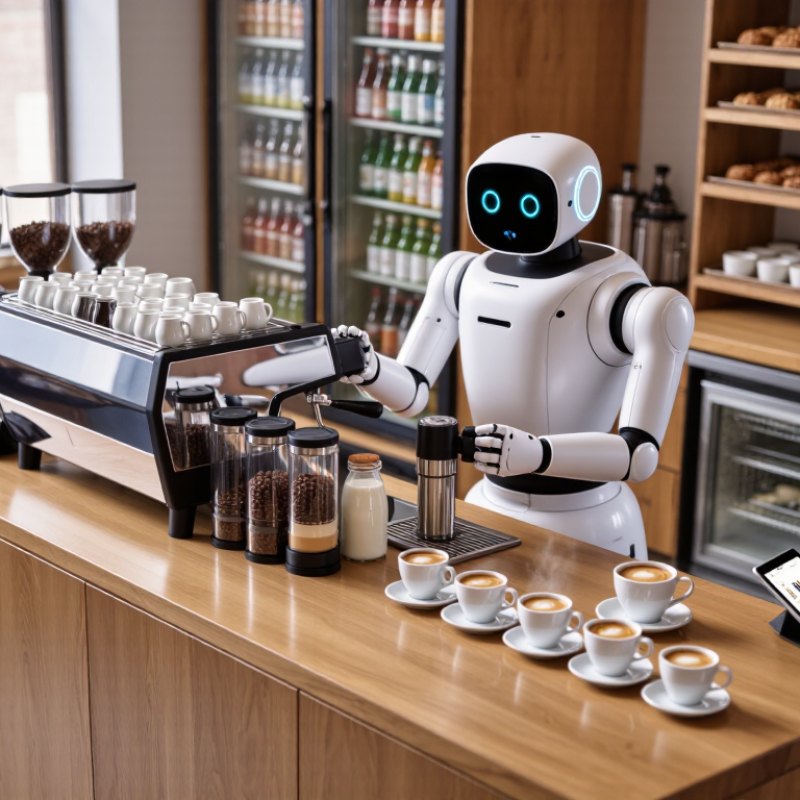
How to Choose the Best Cafe Robot for Your Business?

Define Your Cafe’s Service Needs and Operating Goals

Before comparing cafe robots, define what your staff and customers actually need. Observe a typical morning rush for one week. Note queue length, drink volume, table turnover, and tasks that slow service. A robot may prepare beverages quickly, yet it cannot fix unclear orders or poor counter layout. Write specific operating goals, such as serving 80 drinks per hour or reducing repetitive lifting. Keep the targets measurable. Vague goals create expensive guesses.

Match the machine’s role to your workflow. If your cafe sells customized drinks, check how it handles ingredient changes, allergy controls, and order confirmation. If consistency matters most, measure serving temperature, portion accuracy, and cleaning time. Ask how employees will load supplies, pause production, and respond to errors. During a trial, watch the details: syrup bottles within reach, cups aligned, and spills easy to clean. Small frictions become daily costs.

Reliable decisions require evidence beyond a sales demonstration. Request maintenance schedules, training requirements, safety documentation, and performance data from comparable working environments. Speak with operators who have used similar equipment during busy and quiet periods. Calculate labor impact, energy use, consumables, downtime, and space requirements. Leave room for human service. A machine that saves minutes but makes guests feel ignored may weaken loyalty. I would test one shift before committing; real conditions often expose assumptions the spreadsheet misses.
Assess Robot Types, Features, and Core Capabilities

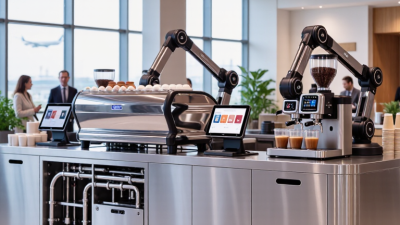
Choosing a cafe robot starts with service design, not appearance. A compact drink robot suits repetitive orders and limited counters. A mobile delivery robot fits larger dining areas, but it needs clear paths and safe stopping points. For a small café, I would map the busiest ten-minute period before comparing models. Watch queue length, cup handoff time, and staff interruptions. Numbers reveal needs. A robot that looks impressive may still slow service during a crowded morning.

Assess core capabilities through real tasks. Can it recognize cup sizes, adjust recipes, and recover from a cancelled order? Check navigation accuracy near stools, wet floors, and changing light. Review cleaning access, battery duration, noise levels, and emergency stop controls. Software should provide readable logs and simple permission settings. Ask how updates are tested. Claims alone are not evidence. Request a supervised trial with your own menu, cups, and counter height.

Feature lists can hide operational weaknesses. Fast movement may create spills, while excessive caution can frustrate waiting customers. Staff training also matters; unclear alerts turn a helpful machine into another workload. Measure successful orders, failed handoffs, downtime, and cleaning minutes for several shifts. I would not trust one quiet afternoon. Results can vary. Leave room for manual service when the robot reaches its limits. Reliable automation supports employees; it does not replace judgment at every difficult moment.

Compare Performance, Capacity, and Workflow Integration

How to Choose the Best Cafe Robot for Your Business?

Compare performance, capacity, and workflow integration before judging appearance or novelty. A robot’s advertised speed is not its real service speed. Measure completed drinks per hour, recovery time, and errors during busy periods. The International Federation of Robotics reported around 205,000 professional service robots sold in 2023, a 30% annual increase. Growth is strong. Yet, adoption does not guarantee suitability.

Test the robot during a genuine morning rush, with custom orders, missing ingredients, and queue changes. Check whether it connects with your ordering system, payment process, inventory alerts, and staff handoff. Capacity also needs careful inspection. Record cup storage, ingredient volume, cleaning intervals, and maximum orders before refilling. The National Restaurant Association’s 2024 State of the Restaurant Industry Report found that 77% of operators viewed recruiting and retaining employees as a significant challenge. Automation may reduce repetitive work, but it can create technical work instead.

Tips: Ask for a live trial, not a polished demonstration. Time ten consecutive orders. Include milk alternatives and cancelled orders. Watch the staff, too. Do they move less, or simply move differently? My own caution is simple: a fast machine can still slow the counter when integration fails. Leave space for cleaning access, manual service, and human judgment. A perfect workflow is unlikely on day one. Expect revisions.

Calculate Costs, Maintenance Needs, and Expected Return

Choosing a café robot starts with a cost model, not a showroom demonstration. The International Federation of Robotics reported nearly 205,000 professional service robots sold worldwide in 2023. Hospitality accounted for more than 54,000 units. Demand is real, but café performance varies sharply by layout, menu, and staffing costs.

List the purchase price, installation, software fees, training, insurance, and electricity. Add maintenance. A robot serving drinks may need daily sensor cleaning, weekly wheel checks, and battery replacement after repeated shifts. During a busy morning, one blocked route can create delays and require a staff member to intervene. That labor time belongs in the calculation. It is easy to ignore.

Use a simple return estimate: annual savings plus extra sales, minus annual operating costs, divided by total investment. The U.S. Bureau of Labor Statistics reports that compensation costs in private industry rose 3.8% year over year in December 2024. Local wages may differ, so use your payroll records instead of a global average. If a robot costs $30,000 and saves $18,000 annually, but maintenance and supervision cost $7,000, the first-year return is modest. Break-even takes about 2.7 years before financing costs. Not perfect. Run a 90-day pilot, record orders served, interruptions, cleaning time, and customer reactions. A robot that looks efficient may still produce weak returns when staff constantly rescue it.

Evaluate Safety, Reliability, and Vendor Support

Choosing a cafe robot starts with safety, reliability, and vendor support—not appearance. The International Federation of Robotics reported nearly 205,000 professional service robots sold worldwide in 2023. That growth increases choice, but it also makes careful evaluation essential.

Watch the robot during a busy service period. Check whether its sensors detect children, chairs, wet floors, and sudden movement. Review emergency-stop access, pinch-point protection, speed controls, and food-contact materials. ISO 13482 offers useful guidance for personal care robot safety, while local food-safety authorities may impose additional hygiene requirements. Ask for documented risk assessments and cleaning procedures. Do not accept vague promises.

Reliability must be measured in your cafe, not only in a showroom. Request pilot data covering missed deliveries, charging failures, software faults, and recovery time. A 30-day test is helpful, but perhaps still too short for holiday demand. Ask vendors for spare-parts availability, technician response times, remote diagnostics, staff training, and software-update policies. The Uptime Institute’s reliability research repeatedly shows that downtime creates operational and financial consequences, even when failures appear brief. I would question any impressive uptime percentage without raw maintenance records. Support quality often decides whether a robot becomes useful equipment or an expensive obstacle.

How to Choose the Best Cafe Robot for Your Business?

Evaluate each robot using measurable factors across safety, reliability, and vendor support before making a purchasing decision.

The scores use a 100-point procurement rubric: safety emphasizes emergency controls and obstacle detection, reliability measures uptime and serviceability, and vendor support measures response time and spare-parts availability.