Choosing a Rental Door Lock involves more than comparing prices or choosing the newest design. Buyers should consider who uses the door, how often it opens, and what maintenance the property can support. A sturdy deadbolt may suit a quiet unit, while a busy entry may need hardware built for frequent use. Small details matter. Check the door’s thickness, backset, and existing holes before ordering; a mismatch can mean extra work or a return. Rekeying after a tenant moves out can help manage access, but the lock must support that process. Smart models add convenience, yet batteries, connectivity, and backup entry deserve attention too. More features are not always better.
The right purchase balances security, durability, installation, and day-to-day use. Look for clear product specifications and materials suited to the door’s exposure. Ask whether the model works with the current hardware, and whether a qualified installer should handle fitting. If the unit faces rain or strong sun, check the manufacturer’s guidance for outdoor use. Smart features can simplify access management, but they also create another system to maintain. A keypad is useful only if users can operate it reliably. There is no perfect choice. An overlooked installation detail can matter as much as the lock itself. This guide explores seven practical tips to help buyers compare options, spot trade-offs, and choose a Rental Door Lock that fits the property. Before buying, verify local requirements and the door’s safe exit function. A little doubt is useful.
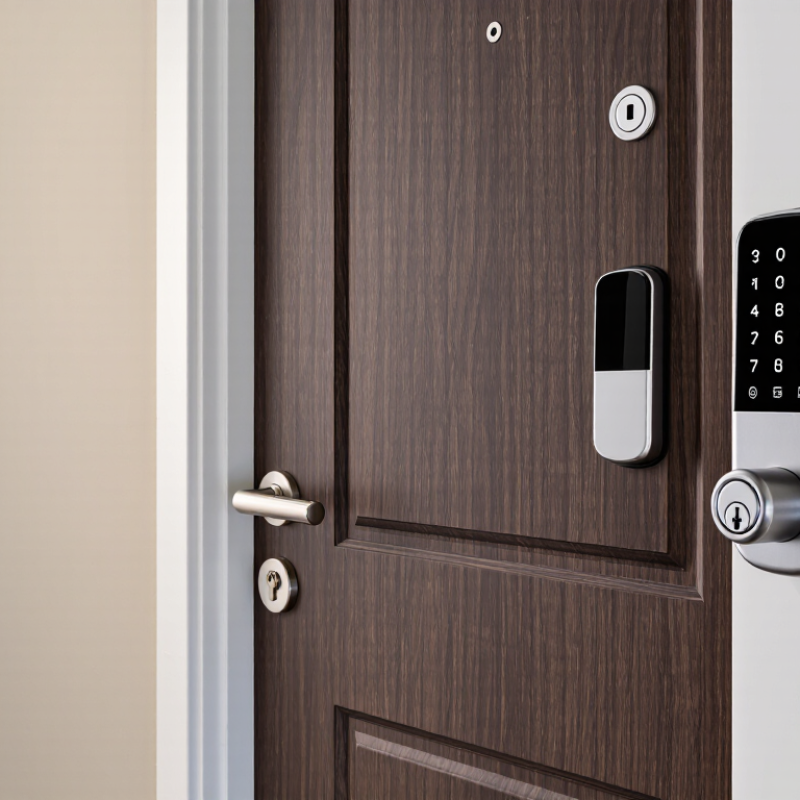
Walk the property as a tenant would, not just from the front path. Check the main entrance, rear door, garage entry, patio doors, and any ground-floor windows. Note which openings are hidden from neighbors or the street. A narrow side passage can make a back door less visible than it seems on a listing. Look for loose hinges, worn frames, and strike plates with short or missing screws. A strong lock cannot make a damaged door secure.
Tip: Test each lock with the door fully closed. Check that the bolt moves smoothly and the key works from outside. Record which doors have different keys, and ask how access is managed between tenancies. It is easy to overlook a garage or shared entrance. A simple checklist helps, though it may not catch every weakness.
Match upgrades to the property’s actual layout. A solid deadbolt may help at an exposed entrance, while a sliding door may need a compatible secondary lock. Check that any added device still allows safe, quick exit from inside. For electronic locks, consider backup access and who controls entry codes after a tenant leaves. Don’t assume a smart feature means better security. If a door frame feels soft or a window latch is loose, ask a qualified locksmith or security professional to assess it before budgeting for new hardware.

A deadbolt is usually a stronger starting point than a spring-latch lock alone, but the door and frame matter too. Check the lock’s ANSI/BHMA grade and the strike plate; a short screw may leave the plate anchored only to thin trim. The FBI’s Crime in the United States 2023 report estimated 847,522 burglary offenses. That figure cannot predict a particular property’s risk, but it is a reason to assess entry points carefully.
For rentals, compare keyed-alike cylinders with separate keys and master-key systems. Keyed-alike locks reduce the number of keys a resident carries, while separate keys limit how widely one lost key works. Rekeying between tenancies can restore control without replacing the whole lock. Ask who keeps copies and how access is recorded. Small detail. It matters.
Smart locks add PIN codes, temporary guest access, and entry logs; those features are useful when cleaners or maintenance staff need limited access. Choose models with battery alerts and a physical backup method, and delete old codes promptly. A connected lock still depends on sound installation, account security, and a working power source. I’d compare those practical safeguards before paying extra for remote access. No feature is foolproof.
| Tip | Lock type or feature | Access and key system | Main advantages | Trade-offs and checks | Rental use |
|---|---|---|---|---|---|
| 1. Start with the door and local requirements | Any replacement lock | Depends on the selected lock | A lock that fits the door is more likely to operate reliably and preserve the door's intended function. | Measure door thickness, backset, and existing bore holes. Check lease terms, building rules, fire-safety requirements, and local codes before changing hardware. | Essential for tenants and property owners before buying or installing a lock. |
| 2. Choose a deadbolt for a separate deadlocking bolt | Single-cylinder deadbolt | Key from outside; typically a thumbturn from inside | Provides a locking bolt separate from a spring-latch entry knob or lever. | Confirm the bolt, strike plate, and door frame align properly. Interior egress and code requirements vary; do not assume a keyed interior is permitted. | A common option for exterior rental doors where compatible with the door and permitted by applicable rules. |
| 3. Check whether a keyed lever is enough | Keyed entry knob or lever | Usually key-operated outside with an interior turn or button | Combines a handle and latch in one unit; lever handles can be easier to operate than knobs for some people. | The spring latch is not the same as a separate deadbolt. Check the product's function and whether the door needs an additional lock. | Useful for compatible doors and interior access points; assess the security needs of exterior doors separately. |
| 4. Plan for key changes between occupants | Rekeyable or replaceable keyed cylinder | Mechanical key; rekeying changes which keys operate the cylinder | Rekeying can invalidate old keys without replacing the entire compatible lock. | Confirm the cylinder can be rekeyed by a qualified locksmith and keep track of who holds current keys. A master-key system requires careful key control. | A practical consideration for rentals with changing tenants or authorized staff. |
| 5. Know what a keypad lock does—and does not do | Standalone keypad lock | PIN code; some models also accept a physical key | Can avoid handing out a physical key and may allow codes to be changed for new occupants. | A keypad is not necessarily connected to the internet or remotely manageable. Check code capacity, battery type, backup entry method, and the instructions for changing codes. | May suit rentals needing simple code-based access without app or network features. |
| 6. Compare retrofit and full smart deadbolts | Retrofit smart lock or smart deadbolt | May use an existing key cylinder, a PIN, an app, or a combination | Depending on the model, can support temporary codes, remote access, or activity notifications. | Retrofit models may retain the existing exterior cylinder; full replacements may require more installation. Check door compatibility, connectivity needs, privacy settings, battery alerts, and mechanical backup access. | Consider only when the owner or authorized manager can maintain the device, manage access, and respond to battery or connectivity issues. |
| 7. Make an access and maintenance plan | Any keyed, keypad, or smart lock | Keys, codes, app credentials, or a combination | Clear procedures help prevent former occupants retaining access and make lockouts easier to manage. | Document authorized users, remove access when tenancy ends, change or rekey credentials as appropriate, and follow the manufacturer's battery and maintenance guidance. | Important for every rental, especially where multiple people manage access. |
Before buying a rental door lock, measure the door’s thickness, backset, and bore diameter. A lock that looks standard may not fit an older door or a metal frame. Check whether the door swings inward or outward, and inspect the existing holes before ordering. Small details matter.
Confirm installation rules with the property owner or manager. Some leases require written approval, especially if installation means drilling, changing exterior hardware, or keeping a spare key. Ask whether the original lock must be reinstalled when you move out. If the door is part of a condo or managed building, check its rules too. Ask before drilling.
Local regulations can affect lock choice and installation. Requirements may cover safe exit, accessibility, fire safety, or access for emergency responders, and they vary by location. Check with the relevant local housing or building office rather than relying on a retailer’s general advice. Keep the lock’s instructions and installation receipt. A checklist can still miss something; I would verify the exact door and rules before purchasing, not after a package arrives. Make sure household members can operate the lock easily, including at night, and clarify who may hold emergency keys.
Treat every rental lock as an access plan, not just a hardware purchase. Record who holds each key, which doors it opens, and when access changes. Keep a dated key log. Small step, often missed. At turnover, rekey or replace cylinders and collect all issued copies. Follow the lease and local requirements when arranging tenant or staff entry.
The FBI estimated 847,522 burglary offenses in 2022. That national figure is not rental-specific, but it’s a reason to limit spare-key circulation. The National Fire Protection Association estimated 1.39 million fires in the United States in 2023. For emergencies, set a clear entry procedure: keep any emergency key secured, and tell authorized responders or staff how to access it. A key hidden under a mat is not a plan.
Give tenants a reliable way to report lockouts and urgent access problems. If using electronic locks, assign individual codes and remove them promptly when access ends. Keep a backup method; dead batteries and network outages happen. I would not rely on an app alone. Test the backup during routine inspections, and document who can enter, why, and how the event was handled.
Plan key control, tenant access, and emergency entry.
The bars show how the seven tips in this checklist are grouped by rental stage—not measured outcomes. Before move-in: consider rekeying and set up a key log. During tenancy: limit and track issued keys, and follow applicable entry-notice rules. For emergencies: document an authorized entry plan and secure any spare key. At move-out: recover keys or revoke credentials, and assess whether rekeying is needed.
A rental lock takes more wear than a lock on a rarely used door. Tenants may turn the key several times a day, and moving furniture can knock the handle out of alignment. Look for a solid metal body, a firm latch, and a cylinder that turns smoothly without sticking. Ask how the lock handles repeated use, not just how it looks on the shelf. A strong finish also matters on doors exposed to rain or salty air. Small details matter. A loose strike plate can cause trouble even when the lock itself is well made.
Maintenance affects the real cost. Check whether the lock can be cleaned or adjusted with basic tools, and whether replacement parts are easy to obtain. A simple design may be cheaper to service than one with hard-to-find components. I would be cautious about choosing only by the lowest purchase price; that can mean more callouts and tenant disruption later. Still, paying extra does not guarantee fewer repairs. Compare the expected service life, routine upkeep, and the cost of replacing the full lock rather than just a worn part. Include labor and the time a unit may sit empty. That adds up. Keep a small record of repairs for each door; it may reveal a pattern you missed during the first inspection.