China Top Integrated Smart Home Manufacturers?
China has become a major force in the Integrated Smart Home industry. Its manufacturers combine connected appliances, lighting, security, climate control, and voice management. However, “top” should not mean the largest name alone. It should reflect real installation quality, interoperability, security practices, support, and long-term reliability.
This guide examines leading Chinese brands, including Huawei, Haier, Midea, Tuya, Aqara, Lumi, and BroadLink. Each company approaches the market differently. Some focus on complete ecosystems. Others specialize in sensors, gateways, appliances, or software platforms. Their products may look impressive in a showroom. Daily performance can tell another story. A useful evaluation must consider network stability, data protection, repair access, app usability, and compatibility with global standards.
Daniel Rausch, a former Amazon executive responsible for smart home products, expressed a valuable principle: “The smart home is not about the devices. It’s about the experiences.” That idea shapes this comparison. A reliable Integrated Smart Home should make routines simpler, not create another technical burden. It should dim lights smoothly, maintain comfortable temperatures, and alert users without constant troubleshooting.
No shortlist is perfect. Regional software restrictions, installation skills, and after-sales service can change the result. Some brands still provide limited English documentation. Others depend heavily on proprietary platforms. This article therefore looks beyond product features. It considers manufacturing strength, engineering capability, ecosystem openness, certifications, and practical user experience. The goal is not to promote one winner, but to help buyers identify the right manufacturer for their home, budget, and future plans.
China’s Smart Home Market Reached RMB 715.7 Billion in 2023 (Statista)
China’s smart home market reached RMB 715.7 billion in 2023, according to Statista. This figure signals strong demand for connected living, but it needs careful interpretation. The market may include appliances, security devices, sensors, platforms, and related services. It does not always represent fully integrated homes.
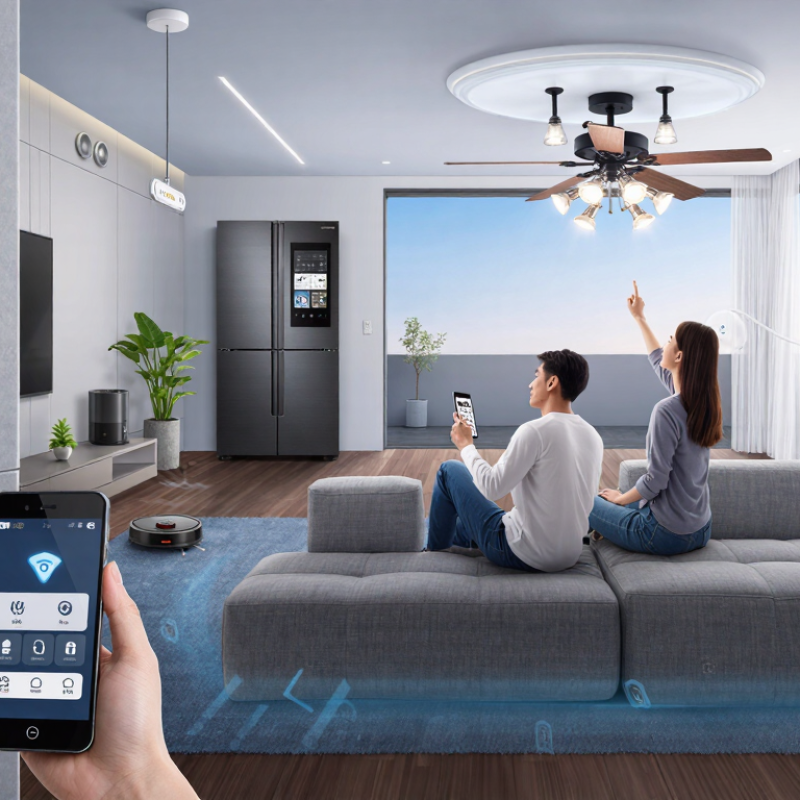
Top integrated smart home manufacturers in China increasingly focus on complete ecosystems. Their solutions can connect lighting, curtains, air conditioning, door locks, cameras, and energy controls. A typical apartment may use motion sensors in a hallway, temperature sensors near windows, and a central gateway beside the router. These details improve daily convenience. They also expose weak points.
Reliable manufacturers should provide stable communication protocols, clear installation standards, and long-term software support. Professional testing matters. Technicians need to check wireless coverage, electrical safety, device compatibility, and privacy settings before handover. A system that works in a showroom may fail behind concrete walls. That lesson is easy to overlook.
Buyers should examine warranty terms, data handling policies, maintenance response, and integration flexibility. Lower prices can be attractive. Replacement costs may appear later. The RMB 715.7 billion market creates opportunities, yet market size alone cannot prove product quality. Practical experience, transparent documentation, and measurable after-sales support remain stronger indicators. Even experienced installers sometimes underestimate user training, especially when older family members operate the system daily.
Integrated Smart Homes: Devices, Protocols, AI, and Cloud-Based Control
China’s leading integrated smart home manufacturers are moving beyond isolated devices. Their strongest systems combine sensors, lighting, climate control, security, and appliances through one control layer. IDC’s Worldwide Smart Home Device Tracker forecast 892.3 million global shipments in 2024, showing strong demand for connected living environments. China’s manufacturing advantage also supports faster hardware iteration and localized installation services.
Protocols determine whether this ecosystem feels reliable. Matter, Wi-Fi, Thread, Bluetooth, and industrial connectivity standards can reduce compatibility barriers. However, protocol support alone does not guarantee smooth performance. A door sensor should trigger lighting within seconds, even when the internet connection fails. Local processing is therefore essential for basic routines, while cloud platforms handle remote access, analytics, software updates, and larger AI models.
AI adds practical value when it understands context rather than commands alone. It can detect unusual movement, adjust temperature patterns, or identify energy waste. IoT Analytics reported 16.6 billion connected IoT devices worldwide in 2023, with the total expected to reach 18.8 billion in 2024. That scale increases the importance of secure identity management, encrypted data transfer, and transparent permission controls. The difficult part remains integration. No system is perfect. A poorly calibrated sensor can create false alarms, and excessive automation may frustrate residents. Professional manufacturers should document testing conditions, publish update policies, and allow manual control when intelligent decisions are wrong.
Leading Chinese Manufacturers: Huawei, Haier, Midea, Xiaomi, and Tuya
China’s integrated smart-home sector is moving from single devices toward coordinated living spaces. Statista Market Insights projects China’s smart-home market revenue to exceed US$45 billion in 2025. IDC’s China Smart Home Device Market Forecast also expects steady shipment growth through 2028. These figures support a clear opportunity for leading Chinese manufacturers.
Their strongest advantage is ecosystem integration. A connected kitchen, bedroom, and entrance can share one control layer. Sensors can adjust lighting, air conditioning, curtains, and security routines within seconds. Cloud platforms improve remote management, while edge processing can reduce response delays. However, integration is not automatically seamless. Different protocols, older appliances, and unstable networks still create daily friction.
Security and reliability must guide purchasing decisions. The 2024 Deloitte Connected Consumer Survey found that privacy remains a major concern for connected-device users. Manufacturers should provide transparent permissions, regular firmware updates, and clear data-storage policies. Professional installers also need to test signal coverage room by room. A small dead zone near the hallway can weaken the entire experience. The industry sometimes overstates “whole-home intelligence.” Human control still matters. A physical switch remains useful when a network fails.
Selection Criteria Using Market Share, Security, Standards, and After-Sales Data
China Top Integrated Smart Home Manufacturers?
Choosing leading integrated smart home manufacturers in China requires more than checking product catalogs. Market share can show distribution strength, but it may confuse shipments with active household installations. Request audited sales data, regional figures, and the percentage of systems still receiving updates. A large installed base matters only when users remain supported.
Security deserves direct testing. Review encryption during device pairing, account recovery, remote access, and data storage. Ask whether security patches have published timelines and clear responsibility. Independent certification is useful, but certificates should match the exact model and software version. A polished showroom proves little.
Standards reveal integration quality. Check support for common communication protocols, local control, accessibility, and interoperability with third-party devices. Test a real scene: a door sensor triggers lighting while the network is briefly offline. Small failures become obvious. After-sales data should include response times, repair rates, spare-part availability, and warranty completion records. Local service centers matter more than promises.
Do not trust perfect numbers.
A careful buyer should compare at least three years of complaint trends, not isolated testimonials. Some manufacturers provide excellent hardware but weak documentation. Others offer strong support in major cities and slower service elsewhere. That gap deserves written clarification. The most reliable choice balances measurable market presence, independently checked security, recognized standards, and after-sales performance that users can verify.
China Top Integrated Smart Home Manufacturers? — Selection Criteria Using Market Share, Security, Standards, and After-Sales Data
Company-neutral evaluation framework based on the practical evidence buyers should request from integrated smart home manufacturers.
The proposed weighting gives the greatest emphasis to independently verifiable market presence, followed by cybersecurity evidence, standards and interoperability, and after-sales capability. These percentages are a transparent screening model rather than company-specific market-share claims.