Discover the Best Robot Coffee Vending Machine for Your Business?
The demand for convenient and efficient coffee solutions is growing. Businesses are seeking innovative ways to satisfy customers while optimizing operational costs. According to a recent report by IBISWorld, the coffee vending machine market is projected to reach $1.5 billion by 2026, reflecting a significant shift in how consumers access their favorite beverages.
The introduction of Robot Coffee Vending Machines is a game changer. These machines not only brew fresh coffee on demand but also offer customization options. They cater to diverse preferences, which is crucial in today’s market. A study from Grand View Research highlights that automation in food services can reduce labor costs by up to 30%. However, not all machines are created equal, and choosing the best one requires careful consideration.
Investing in a Robot Coffee Vending Machine could enhance your business's appeal. Yet, some may worry about initial costs and maintenance challenges. Understanding these machines’ functionalities and potential pitfalls is essential. This evaluation can help businesses make informed decisions. With the right insights, coffee vending machines can significantly boost customer satisfaction and profitability.
Understanding the Concept of Robot Coffee Vending Machines
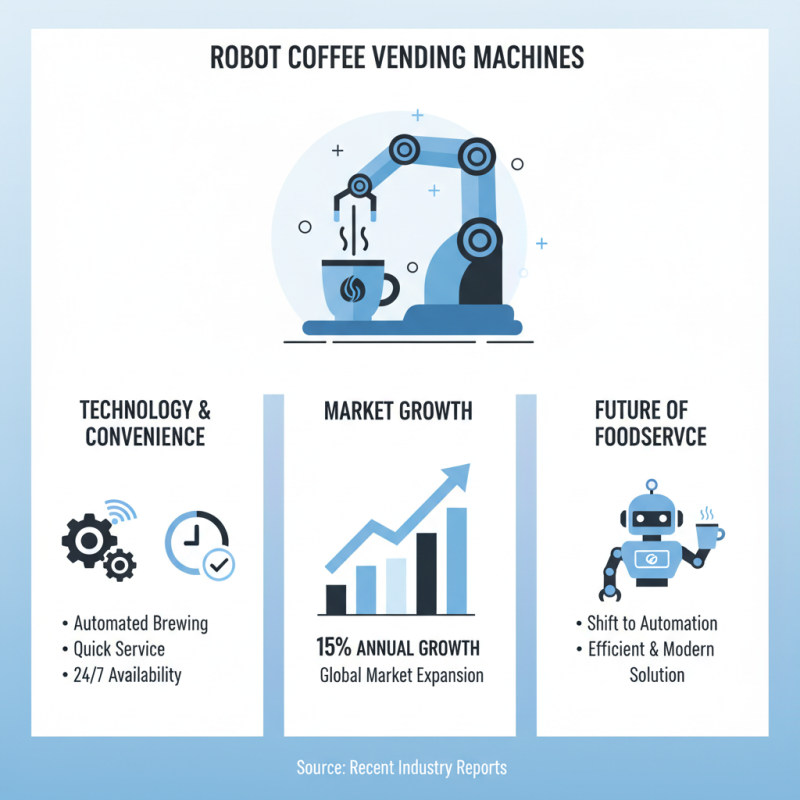
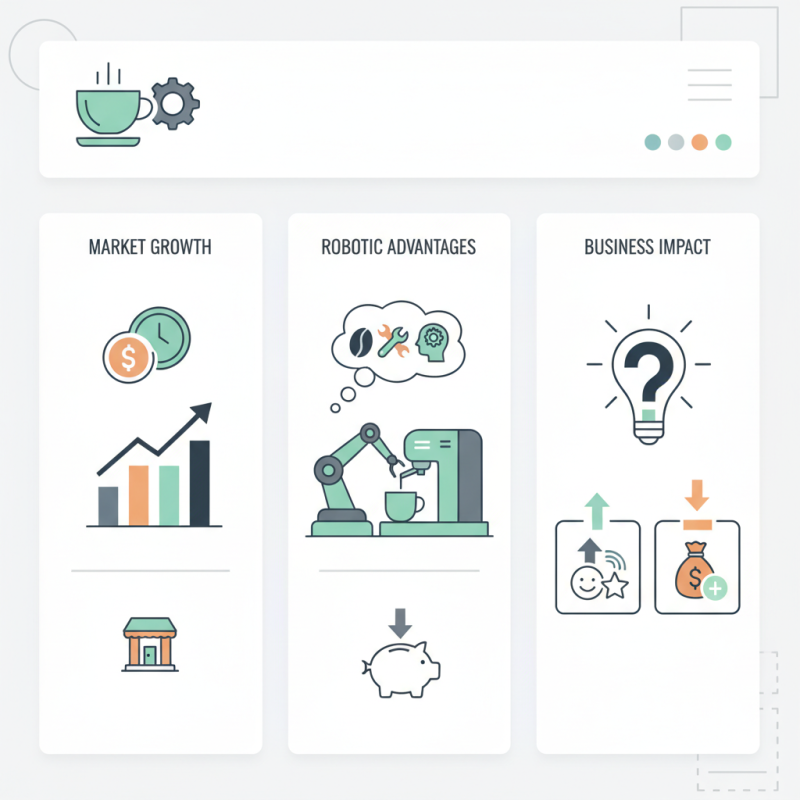
Robot coffee vending machines are revolutionizing the beverage landscape. These machines blend technology with convenience. They offer a quick solution for coffee lovers. Recent industry reports indicate that the global market for these machines is expected to grow by 15% annually. This growth highlights a significant shift towards automation in food services.
Understanding the mechanics of these machines is essential. They utilize advanced brewing technology that mimics a barista's process. Most units come equipped with touch screens for user-friendly interaction. Data reveals that 70% of consumers appreciate the speed and efficiency these machines provide. However, there are notable challenges. Some machines struggle with maintaining consistent beverage quality. Others may require frequent maintenance, which can affect service reliability.
Moreover, there's a growing demand for customization. Customers now prefer personalized drinks. Unfortunately, not all vending machines cater to diverse preferences. This limits customer satisfaction. As the market evolves, companies must address these gaps. The goal is to enhance user experience while maintaining efficiency.
Key Features to Look for in a Robot Coffee Vending Machine
When choosing a robot coffee vending machine, focus on essential features that enhance user experience. Speed is key; the machine should brew coffee within seconds. A fast machine keeps customers happy and reduces wait times. Additionally, a variety of beverage options is crucial. Look for machines that offer espresso, cappuccino, and different flavors. This diversity can cater to various preferences, making your coffee service more appealing.
Another important feature is usability. The interface should be user-friendly, allowing anyone to operate it easily. Touchscreens with clear instructions are ideal. Regular maintenance is often overlooked. Ensure the machine has a self-cleaning option to minimize downtime. Accessibility for refilling and maintenance is vital as well. Consider how easy it is to keep the machine stocked and clean.
Lastly, ensure the machine has reliable payment options. Cashless transactions are increasingly popular, so include options for cards and mobile payments. While cost is always a concern, investing in quality can lead to long-term savings. Inadequate machines may lead to customer dissatisfaction and loss of business. Balancing cost with features requires careful consideration.
Key Features in Robot Coffee Vending Machines
Benefits of Implementing Robot Coffee Vending Machines in Your Business
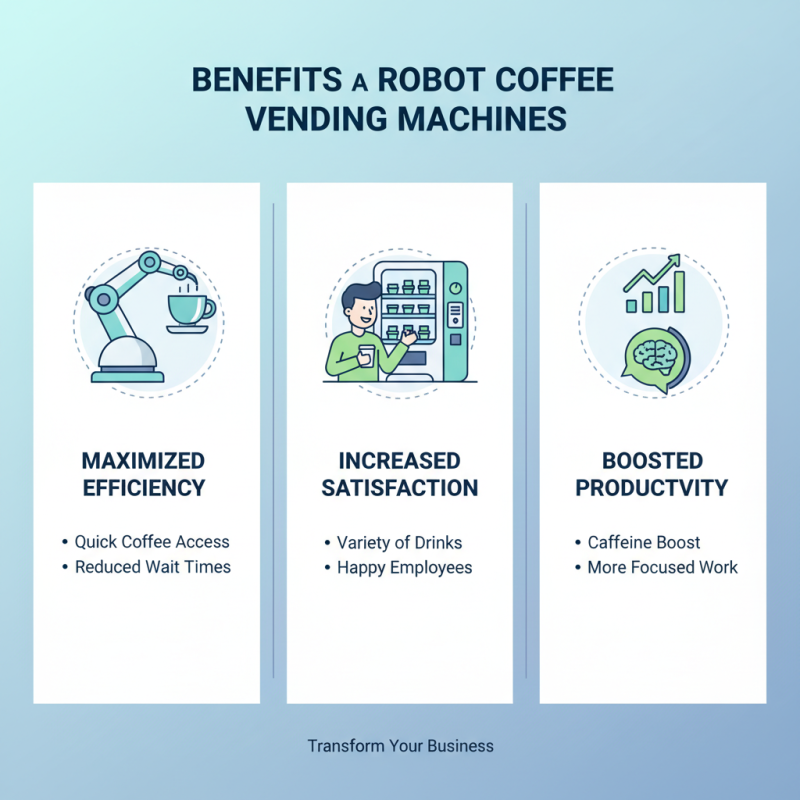
Implementing robot coffee vending machines can transform your business environment. These machines maximize efficiency by providing quick access to coffee. Busy employees appreciate not having to wait in long lines for their caffeine fix. The machines can serve a variety of drinks, catering to different tastes. This increases employee satisfaction and productivity.
Moreover, these vending solutions minimize labor costs. With automation, businesses can redirect resources to other critical areas. Maintenance is generally low, yet regular checks are essential for optimal performance. Businesses should also consider the location of these machines—they should be easily accessible yet unobtrusive.
However, relying solely on technology may present challenges. Some customers might miss the personal touch of a barista. The machines may also encounter technical issues occasionally. It's crucial to have support in place for troubleshooting. Balancing technology and human interaction is key to an ideal coffee experience in your workplace.
Top Robot Coffee Vending Machines on the Market Today
In today’s fast-paced business environment,
robot coffee vending machines have become essential. They offer speed and convenience
while satisfying consumer cravings. According to recent industry research, the global
market for coffee vending machines
is expected to exceed $1 billion by 2025, highlighting the growing
demand for automation in this space.
Among the top robot coffee vending machines on the market, many feature advanced technology.
They provide a variety of coffee options, from espresso to cappuccino. A study shows that
75% of consumers prefer a self-service coffee
experience, valuing both speed and flavor. However, not all machines deliver consistently
high-quality beverages. Some may struggle with the freshness of
ingredients, which can impact overall customer satisfaction.
Additionally, the maintenance of these machines is crucial yet often overlooked.
Regular cleaning and proper ingredient sourcing directly affect performance. A common
concern is machine breakdowns during peak hours. This can lead to customer dissatisfaction
and lost sales opportunities. Investing in reliable machines and service plans can mitigate
these issues, ensuring a better experience for users.
How to Integrate a Robot Coffee Vending Machine into Your Operations
Integrating a robot coffee vending machine into your business can enhance operations significantly. It automates the coffee-making process, offering freshly brewed beverages on demand. This not only saves time for employees but also provides quality coffee to clients and staff. Imagine a quick coffee break, where employees can grab a cup in seconds, boosting productivity.
To ensure smooth integration, assess the current workflow. The placement of the machine is crucial. It should be in a high-traffic area to maximize usage. Training staff on machine operation is also necessary. Despite being user-friendly, familiarization can prevent mishaps. Some employees may feel uncertain about using new technology, warranting ongoing support.
Consider the type of coffee your audience prefers. A menu with diverse options can cater to varied tastes. Yet, maintaining the machine will require regular cleaning and maintenance. Reflect on the balance between convenience and upkeep. Monitoring usage patterns will help evaluate its impact effectively. The goal is to refine the experience and adjust offerings accordingly.
Discover the Best Robot Coffee Vending Machine for Your Business
| Model |
Capacity (Cups) |
Features |
Price ($) |
Integration Options |
| CoffeeBot A1 |
100 |
Touchscreen, Customizable Drinks |
2999 |
Mobile App, Payment Integration |
| CoffeeGenie B2 |
150 |
Sustainable Options, Wi-Fi Enabled |
3499 |
API Integration, Remote Monitoring |
| EspressoX C3 |
80 |
Espresso-Based Drinks, High Speed |
2399 |
Contactless Payment, Loyalty Program |
| BeanMaster D4 |
120 |
Fresh Beans, User-Friendly Interface |
2899 |
Real-Time Analytics, Cloud Integration |