2026 Best Coffee Robot Machine for Your Business Needs?
In today’s fast-paced market, businesses seek innovative solutions to enhance productivity. A Coffee Robot Machine stands out as a game-changer. This technology automates coffee brewing, ensuring consistent quality and efficiency. It adapts to various business needs, from cafés to offices.
Imagine a busy coffee shop where every second counts. With a Coffee Robot Machine, employees can focus on customer service rather than manual brewing. Customers appreciate quick service and great taste. However, the initial investment and technical setup can be challenging. Evaluating your unique requirements is crucial before deciding.
Recent advancements in this field have made Coffee Robot Machines more accessible and reliable. You can find models that blend seamlessly with your workspace. Yet, it’s essential to consider maintenance and support options. Balancing automation with a personal touch remains a crucial reflection for most businesses. Enhanced efficiency should not compromise the coffee experience.
The Importance of Coffee Robots in Modern Businesses
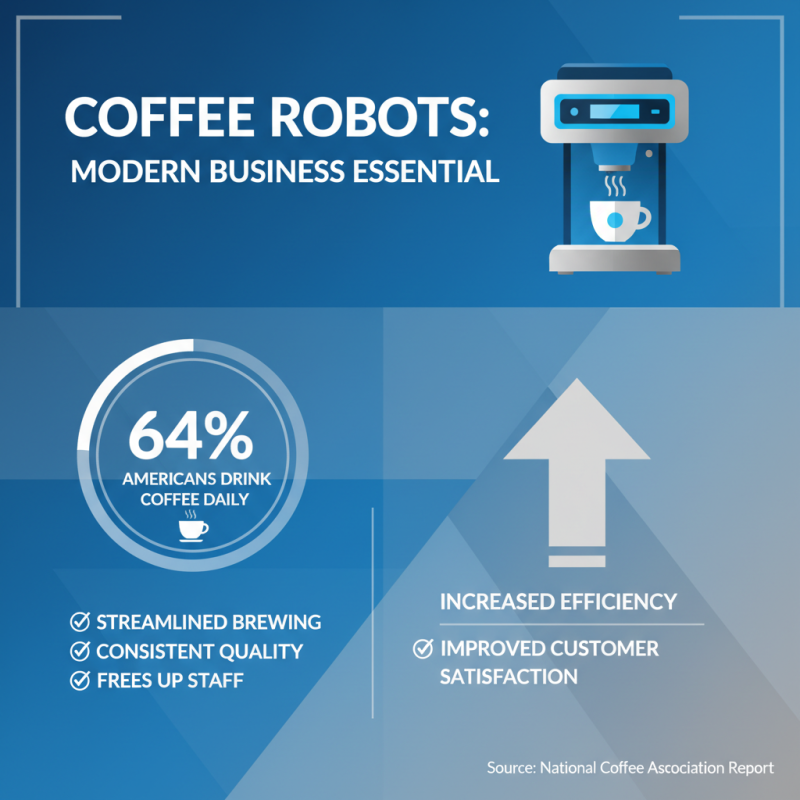
In today's fast-paced business environment, coffee robots are revolutionizing the way companies serve this beloved beverage. According to a report by the National Coffee Association, 64% of Americans drink coffee daily, highlighting the beverage's essential role in workplace culture. Coffee robots streamline the brewing process, ensuring consistent quality and freeing up staff for more critical tasks. This innovation not only enhances efficiency but also improves customer satisfaction.
Some businesses may hesitate to adopt coffee robots, fearing high costs or the complexity of integration. However, research from the Specialty Coffee Association shows that automating coffee preparation can reduce labor costs by up to 30%. A robot can make up to 200 cups of coffee per hour, providing a quick solution during peak hours.
**Tip:** When selecting a coffee robot, consider its features like remote management and customizable settings. Not all robots are created equal, so invest time in research.
Additionally, embracing coffee robots can lead to surprising challenges. Some users report technical issues or difficulty in sourcing spare parts. A well-planned maintenance schedule can alleviate many of these concerns.
**Tip:** Always keep a user manual handy and conduct regular check-ups to ensure your robot performs optimally.
Key Features to Look for in a Coffee Robot Machine
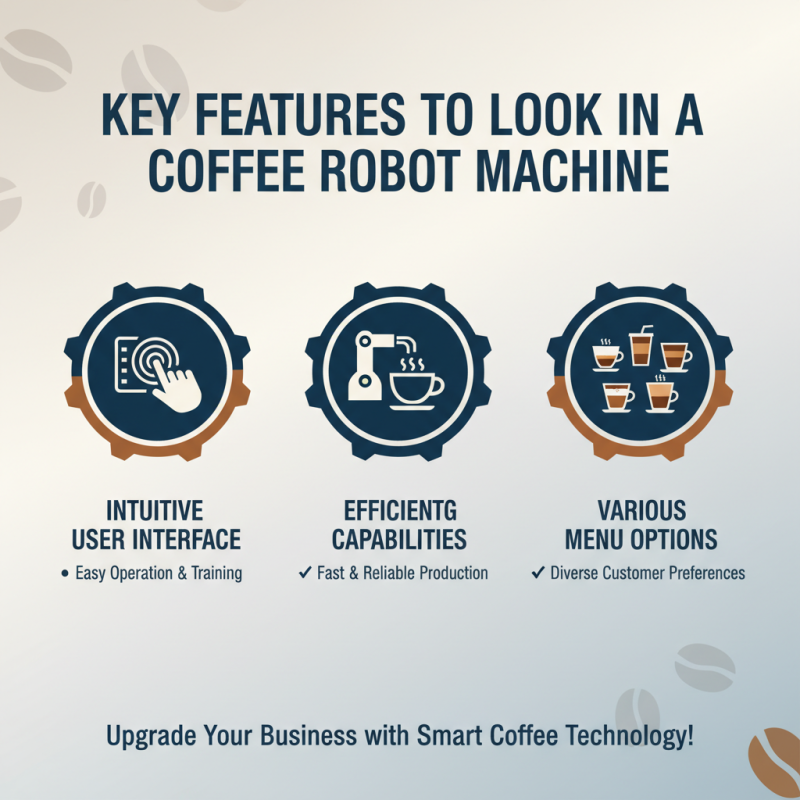
When selecting a coffee robot machine for your business, consider several essential features. An intuitive user interface is crucial. Employees should easily operate the machine without extensive training. Efficient brewing capabilities rank high on the list as well. Machines that can produce a varied menu will cater to diverse customer preferences.
Another critical feature is maintenance simplicity. Regular cleaning will keep quality consistent. A well-designed machine should provide alerts for maintenance needs. According to industry reports, around 30% of coffee machines fail due to improper maintenance. Therefore, a reliable machine can greatly enhance customer satisfaction.
Tips: Look for machines with programmable features. These allow customization of drink strength and temperature. Additionally, consider energy efficiency. Machines with lower energy usage can reduce operational costs significantly. Remember, the right coffee robot machine should blend innovation with practicality. Always reflect on the returns from your investment versus customer feedback. This balance is essential in thriving in the competitive coffee market.
Comparison of Top Coffee Robot Brands for 2026
As coffee robot technology evolves, businesses must carefully evaluate their options. The coffee robot market is expected to grow by 25% annually, according to recent industry reports. This growth reflects increasing demand for automation in cafes and restaurants, as operators seek efficiency and consistency in their offerings.
Top brands in the market vary widely in features. Some models focus on speed, serving a great cup in under a minute. Other robots emphasize customization, tailoring drinks to individual customer preferences. Reports show that 65% of consumers now expect personalized beverages. But despite this trend, not all machines deliver consistent quality, leading to potential customer disappointment.
Maintenance can also be a challenge. Many coffee robots require regular cleaning to ensure optimal performance. In fact, a study found that 45% of coffee machines fail due to neglect in upkeep. Selecting the right machine involves weighing these factors carefully. Understanding your specific business needs is crucial in this rapidly changing market.
2026 Best Coffee Robot Machine Comparison
Cost Analysis: Investment vs. Profitability of Coffee Robots
Investing in coffee robots can be appealing for many businesses. The potential for enhanced efficiency is significant. A recent industry report highlighted that automated coffee solutions can reduce labor costs by approximately 30%. This statistic draws attention to the critical aspect of cost analysis. However, it's essential to consider the upfront investment required for these machines. Prices can range from $5,000 to $50,000, depending on capabilities.
Profitability from coffee robots hinges on consistency. Coffee quality often impacts customer satisfaction. According to studies, businesses with automated machines report a 20% increase in repeat customers due to improved service speed and consistent taste. On the flip side, maintenance costs can surprise owners. Regular service is crucial, and neglect can lead to operational downtimes.
Evaluating the true cost of coffee robots involves both financial metrics and customer feedback. While initial investments can be hefty, the long-term benefits often outweigh these costs. Yet, operators should be cautious about over-reliance on automation. Human touch in customer service should not be entirely replaced. It's a fine line between efficiency and the warmth that customers often seek in their coffee experience.
User Reviews and Experiences with Coffee Robot Machines
User reviews of coffee robot machines reveal valuable insights into their performance and reliability. Many users appreciate the consistency of coffee quality. Automated brewing ensures each cup has a similar taste profile, appealing to businesses focused on customer satisfaction. However, some operators noted setup challenges. Initially, understanding the programming features can be overwhelming.
It's essential to prioritize maintenance. Regular cleaning is crucial for optimal performance. Users often report issues stemming from neglecting machine upkeep. Simple tasks like descaling and replacing filters can enhance longevity. Don't overlook these necessary steps.
On the other hand, some experiences highlight the need for user adaptation. While the technology can streamline operations, employees must adapt to new processes. Training sessions can mitigate initial frustrations. A lack of proper training leads to inefficiencies. Investing in staff education pays off through smoother operations and happier customers.
2026 Best Coffee Robot Machine for Your Business Needs
| Model |
Rating |
Price ($) |
Features |
User Feedback |
| CoffeeMaster 3000 |
4.8 |
1500 |
Automatic brewing, customizable recipes, self-cleaning |
Excellent quality and ease of use. Great for high volume. |
| Espresso Pro X |
4.5 |
1200 |
Integrated grinder, foam frother, compact design |
Great espresso quality, but slightly noisy. |
| BrewMaster Elite |
4.6 |
1800 |
Touchscreen control, multiple brewing options, large capacity |
User-friendly interface, perfect for offices. |
| JavaBot 2.0 |
4.7 |
1350 |
AI coffee recommendations, voice activation, fast brewing |
Innovative features, highly appreciated by tech-savvy users. |
| CaféExpress 1000 |
4.4 |
900 |
Quick brew time, energy-efficient, easy maintenance |
Good for small businesses; affordable price point. |